Apple Pay launches in India with Axis Bank credit cards
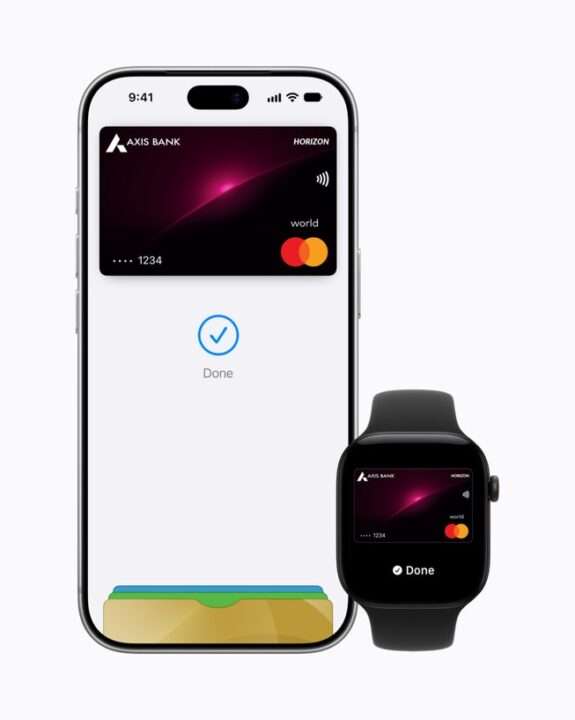
Apple switched on Apple Pay in India on 30 September 2026, twelve years after the service debuted, starting with Axis Bank-issued Visa and Mastercard credit cards on iPhone, iPad and Apple Watch; RuPay and UPI are not supported.
The details
- Apple says Apple Pay became available in India on 30 September 2026, with Axis Bank as its first issuing partner.
- Apple says the service works at launch with Axis Bank-issued Visa and Mastercard credit cards.
- MacRumors reports that India's domestic RuPay card network is not supported by Apple Pay at launch.
- TechCrunch reports that HDFC Bank, ICICI Bank and SBI Card are not part of the launch, with commercial terms still under negotiation.
- Apple says Apple Pay in India is supported on iPhone, iPad and Apple Watch, with Mac support described as coming soon.
- Apple says actual card numbers are not stored on the device or on Apple servers, and are not shared by Apple with the merchant; a unique Device Account Number is encrypted and stored in the Secure Element.
- Apple says payments are authorised with Face ID, Touch ID or a device passcode.
- Apple says Apple Pay is available in more than 90 countries and regions and works with more than 11,000 bank and network partners worldwide.
- Apple names Blinkit, Croma, Ixigo, Reliance brands, Tata 1mg and Zomato among the merchants accepting Apple Pay in India at launch.
- MacRumors states that the Unified Payments Interface handles about 84 percent of India's digital transaction volume and does not work with Apple Pay.
- TechCrunch reports that Apple is seeking roughly 20 basis points on transactions, against a 40 to 50 basis point margin in India's payments layer.
- TechCrunch reports that Apple accounted for 28 percent of India's smartphone market by value in 2025, up from 23 percent a year earlier.
Why it matters
India was one of the last large markets without Apple Pay, so the launch closes a long-standing gap in Apple's services business in the country where it is growing fastest by value. The practical reach is narrow for now: one issuer, credit cards only, no RuPay and no UPI, so most Indian digital payments remain outside the service.